Colossi of Memnon Guide: Luxor's Twin Giants on the West Bank
Colossi of Memnon guide: two giant statues of Amenhotep III on Luxor's West Bank. The legend, what to see, free access, opening times and visiting tips.
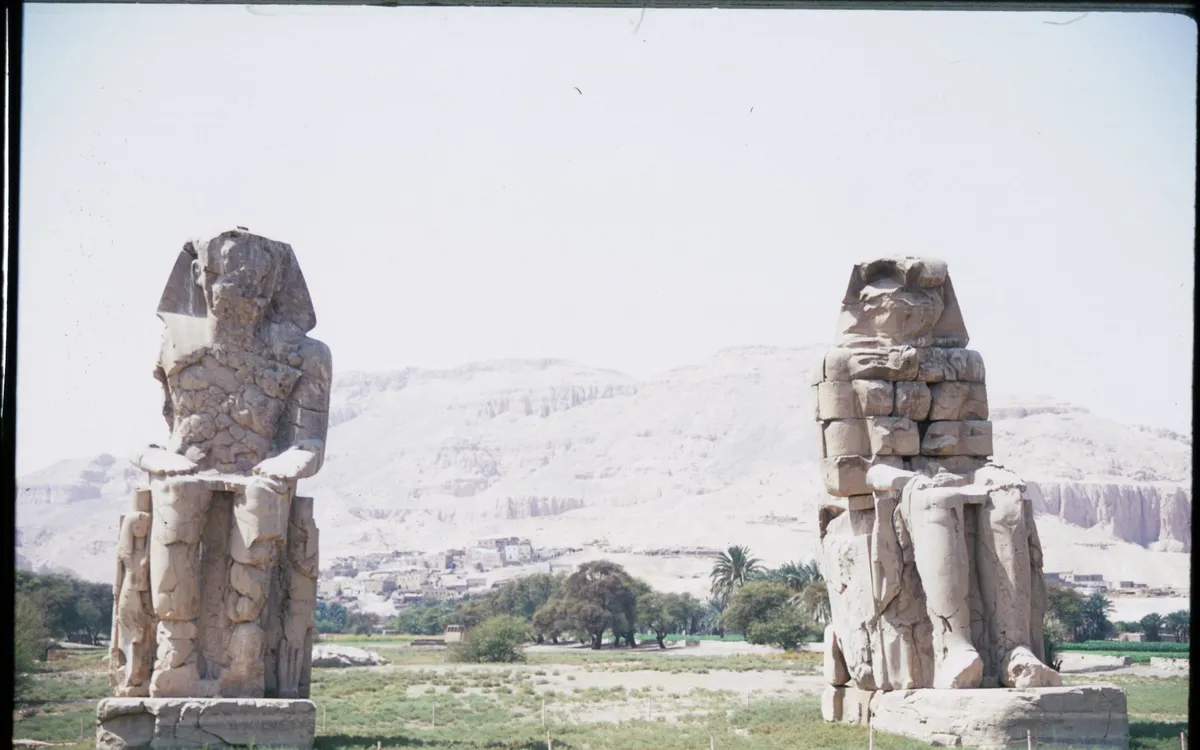
Rising abruptly from the green fields of Luxor’s West Bank, two enormous stone figures sit side by side, gazing east toward the Nile. The Colossi of Memnon have greeted travellers for more than three thousand years, and one of them was once famous across the ancient world for “singing” at dawn. Best of all, they stand in the open air and cost nothing to see.
What the Colossi are and why they matter
The two statues depict the pharaoh Amenhotep III, who ruled during the Eighteenth Dynasty at the height of Egypt’s New Kingdom power and wealth. They are carved from massive blocks of quartzite sandstone and originally flanked the entrance to his enormous mortuary temple — once one of the largest temple complexes in all of Egypt.
That temple has almost entirely vanished, toppled by earthquakes and the slow reuse of its stone over the centuries. The colossi endured because of their sheer mass, leaving these two seated giants as the most visible survivors of a monument that has otherwise returned to the fields.
The legend of the singing statue
The name “Memnon” comes from Greek and Roman visitors, who linked the northern statue to Memnon, a hero of the Trojan War. After an earthquake damaged that statue in antiquity, it began to emit a strange sound at sunrise — likely caused by temperature changes and moisture in the cracked stone.
Ancient tourists travelled from across the Roman world to hear the “song of Memnon,” believing it to be the hero greeting his mother, the dawn goddess. Some even carved their names and impressions into the statue’s base, where these graffiti can still be seen. A later Roman restoration is thought to have silenced the phenomenon for good.
What you will see and how to visit
The colossi sit right beside the main road leading into the West Bank monuments, so most visitors stop here first. The site is open-air and freely accessible — there is no enclosed ticket area for the statues themselves, which makes this an easy, no-fuss stop.
- The two seated colossi, each towering far above the modern road and visitors below.
- The smaller figures carved beside the pharaoh’s legs, representing his wife and mother.
- The Roman-era graffiti on the northern statue, a rare written record left by ancient sightseers.
- The wider archaeological zone behind them, where ongoing excavations continue to reveal more of the lost mortuary temple.
Tip: stop at the colossi at the start of your West Bank tour, in the soft early light. You’ll have a clear view before the sun climbs and the tour coaches arrive, and you can photograph the statues against an open sky.
Getting there and how long to spend
The Colossi of Memnon lie on the West Bank of the Nile at Luxor, on the route shared by the Valley of the Kings, the Temple of Hatshepsut at Deir el-Bahari, and the other West Bank sites.
| Detail | What to know |
|---|---|
| Typical visit length | 15 to 30 minutes |
| Cost | Open-air, freely accessible |
| Usual base | Luxor |
| Combine with | Valley of the Kings, Hatshepsut’s temple |
Because they sit on the main road, the colossi are almost always included as a quick stop on a West Bank tour, whether by organised excursion, private driver or taxi. It is not a destination you build a day around, but rather a memorable bookend to the tombs and temples nearby. See our plan your trip page for help organising a full West Bank day.
Best time to visit and practical tips
Visit at the start of your day, ideally in the cooler months from autumn to spring when Luxor is most comfortable. There is little shade, so a hat and water are sensible even for a short stop.
You only need fifteen to thirty minutes here, but it is well spent. Set against the backdrop of the Theban hills and the green fields where a great temple once stood, the Colossi of Memnon are a fittingly grand introduction to the wonders of Luxor’s West Bank.
Colossi of Memnon Guide: Luxor's Twin Giants on the West Bank
Skip the queues and secure your spot — book your tickets and tours through our trusted partner Tiqets.
Check tickets on TiqetsTickets & activities in Luxor
Some links on EgyptInterActive are affiliate links: if you book through them we may earn a commission, at no extra cost to you. It never changes our recommendations.
Keep reading
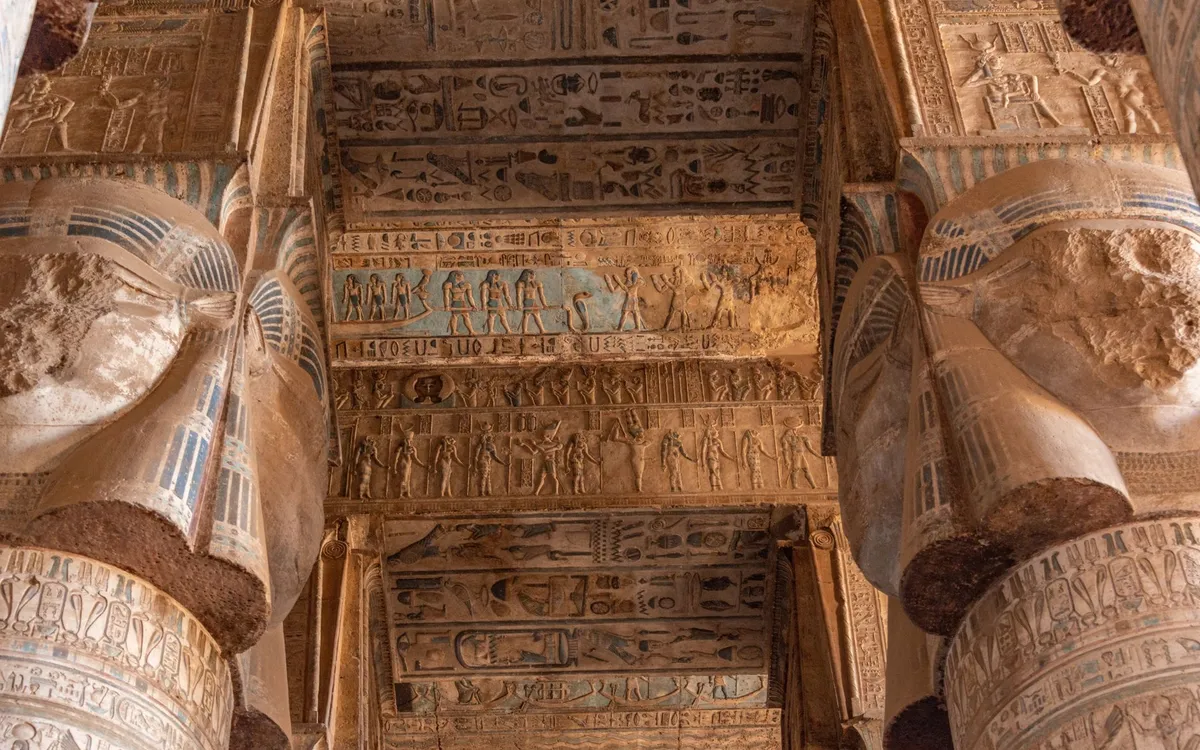
Dendera Temple Guide: Hathor's Temple and Its Painted Ceiling
Dendera dazzles with restored colour and a star-painted ceiling — one of Egypt's most complete temples, dedicated to the goddess Hathor.
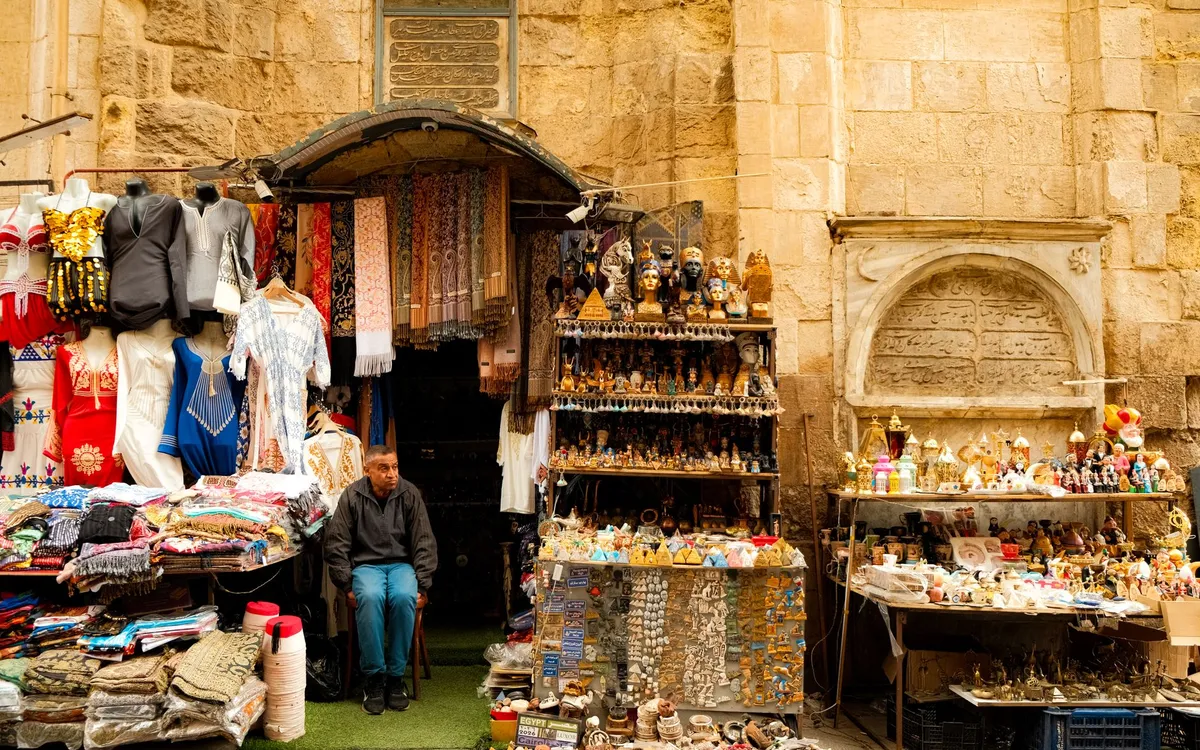
Khan el-Khalili Guide: Cairo's Historic Bazaar and How to Visit
Khan el-Khalili is Cairo's great medieval bazaar — a labyrinth of lantern-lit alleys, craftsmen, spice stalls and the legendary El Fishawy café.
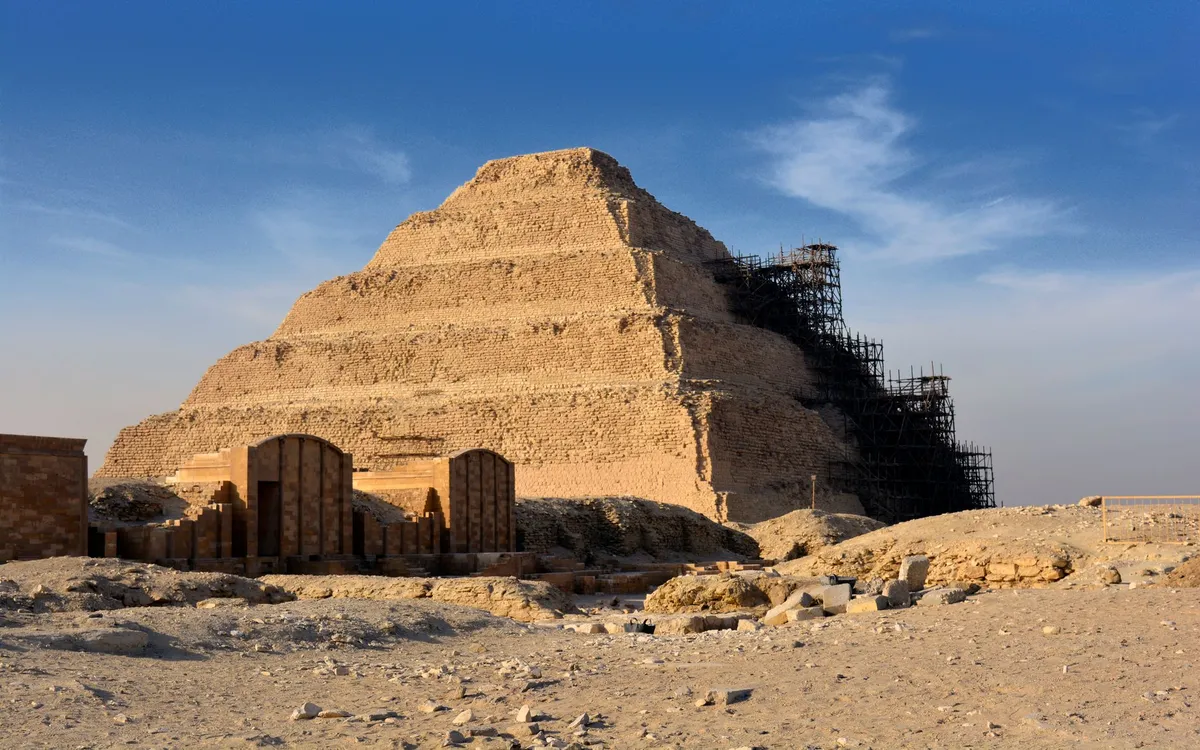
Saqqara & the Step Pyramid of Djoser: A Complete Visitor Guide
Saqqara holds the Step Pyramid of Djoser — the oldest great stone building on Earth and the ancestor of every pyramid that followed.