Medinet Habu Temple: Ramesses III's Colourful West Bank Wonder
Medinet Habu guide: the mortuary temple of Ramesses III on Luxor's West Bank. Vivid reliefs, battle scenes, opening hours, how to get there and visiting tips.
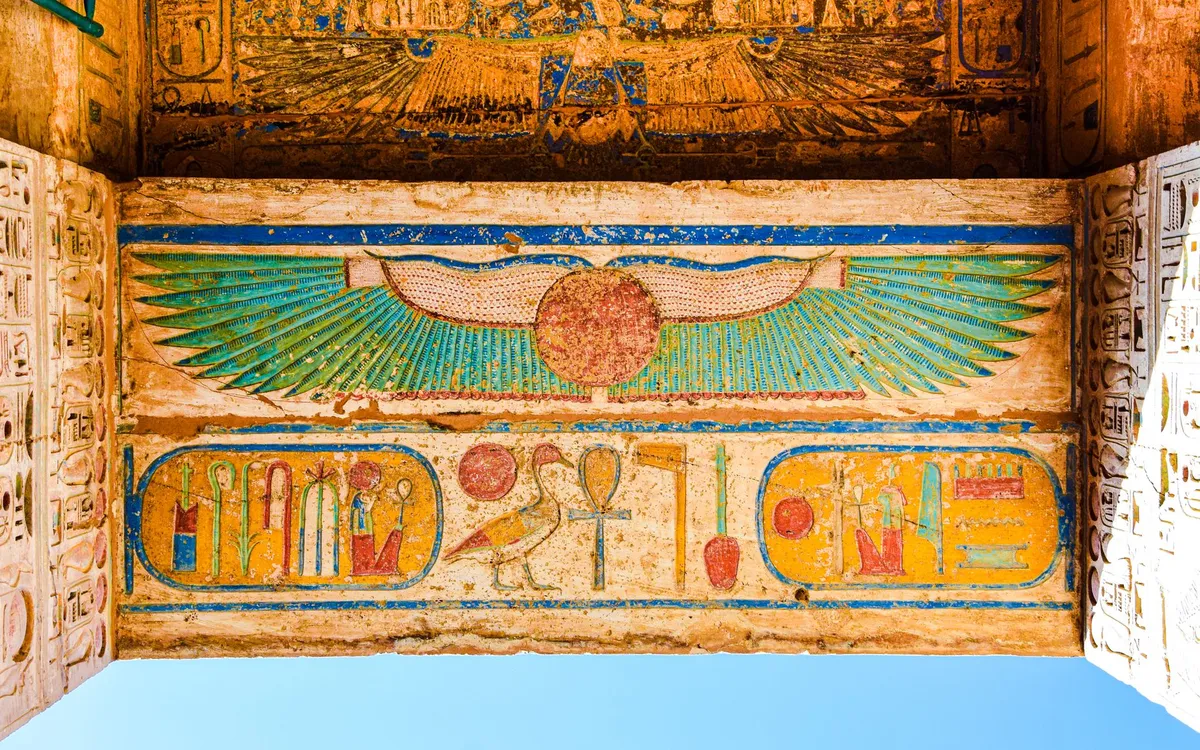
Tucked against the edge of the cultivated fields on Luxor’s West Bank, Medinet Habu is the great mortuary temple of Ramesses III. It is one of the best-preserved temple complexes in all of Egypt, yet it sees a fraction of the crowds at Karnak or the Valley of the Kings. For visitors who want monumental scale, deeply carved reliefs and surviving colour without the crush, this is one of Luxor’s most rewarding stops.
What Medinet Habu is and why it matters
Medinet Habu is the funerary temple of Ramesses III, who ruled in the Twentieth Dynasty and is often considered the last great pharaoh of the New Kingdom. Like other West Bank mortuary temples, it was built to honour the king and sustain his cult after death, rather than to serve as his tomb.
The site is far older than Ramesses III alone. It grew up around a small earlier shrine associated with the god Amun, and remained an important religious and administrative centre long after the pharaohs. In later periods a whole town developed within and around the temple walls, which is part of why the complex is so substantial and so well protected.
What makes Medinet Habu special is its preservation. Because much of the temple was buried and enclosed for centuries, the carving is exceptionally crisp, and in many sheltered areas the original pigments still survive on ceilings and column tops.
What you will see
The approach passes through a distinctive fortified gateway known as the Syrian Gate, modelled on a Near Eastern fortress. Beyond it, the main temple opens up in a sequence of pylons, courts and halls.
- The towering first pylon, carved with colossal scenes of the king smiting his enemies.
- The famous battle reliefs, including depictions of Ramesses III’s wars against the so-called Sea Peoples, an invaluable historical record.
- The painted columns and ceilings in the inner courts, where reds, blues and golds still cling to the stone.
- The deeply incised sunk relief, cut so far into the walls that the carvings throw bold shadows in raking light.
Tip: bring binoculars or zoom in with your camera to study the upper walls and ceilings. The best surviving colour is often high up, where it has been shaded from sun and weather for three thousand years.
Tickets and opening hours
Medinet Habu is a ticketed site with set daytime opening hours, typically from the early morning until late afternoon, with hours sometimes shortened in the height of summer. A standard temple ticket covers entry.
Rather than relying on figures that change, buy your ticket at the official on-site box office or through recognised ticketing channels, and confirm current hours with your hotel or guide the day before you go. If you plan to visit several West Bank monuments, ask about combined or multi-site arrangements when you buy.
Getting there and how long to spend
Medinet Habu sits at the southern end of the West Bank monuments, near the village of Kom Lolah, a short drive from the Colossi of Memnon and the Valley of the Kings.
| Detail | What to know |
|---|---|
| Location | West Bank of Luxor, southern end |
| Typical visit length | 1 to 1.5 hours |
| Usual base | Luxor |
| Combine with | Colossi of Memnon, Medinet Habu’s neighbours, Valley of the Kings |
Most visitors reach the West Bank by private driver, taxi or organised tour, crossing the Nile by bridge or local ferry. Because Medinet Habu is large and rewards slow looking, give it more time than a quick photo stop. Our plan your trip page can help you build a sensible West Bank itinerary that includes it.
Best time to visit and practical tips
Aim for early morning, both for cooler temperatures and for the soft, raking light that brings out the relief carving. The cooler months from autumn to spring are the most comfortable season in Luxor, and Medinet Habu’s relative quiet means you can usually explore without queues at any time of year.
Wear sun protection and carry water, as shade is limited in the open courts. Take your time in the inner halls, where the surviving paint rewards a slow, careful look. Many travellers leave Medinet Habu surprised that somewhere this grand and this colourful remains one of Luxor’s quieter corners.
Medinet Habu Temple: Ramesses III's Colourful West Bank Wonder
Skip the queues and secure your spot — book your tickets and tours through our trusted partner Tiqets.
Check tickets on TiqetsTickets & activities in Luxor
Some links on EgyptInterActive are affiliate links: if you book through them we may earn a commission, at no extra cost to you. It never changes our recommendations.
Keep reading
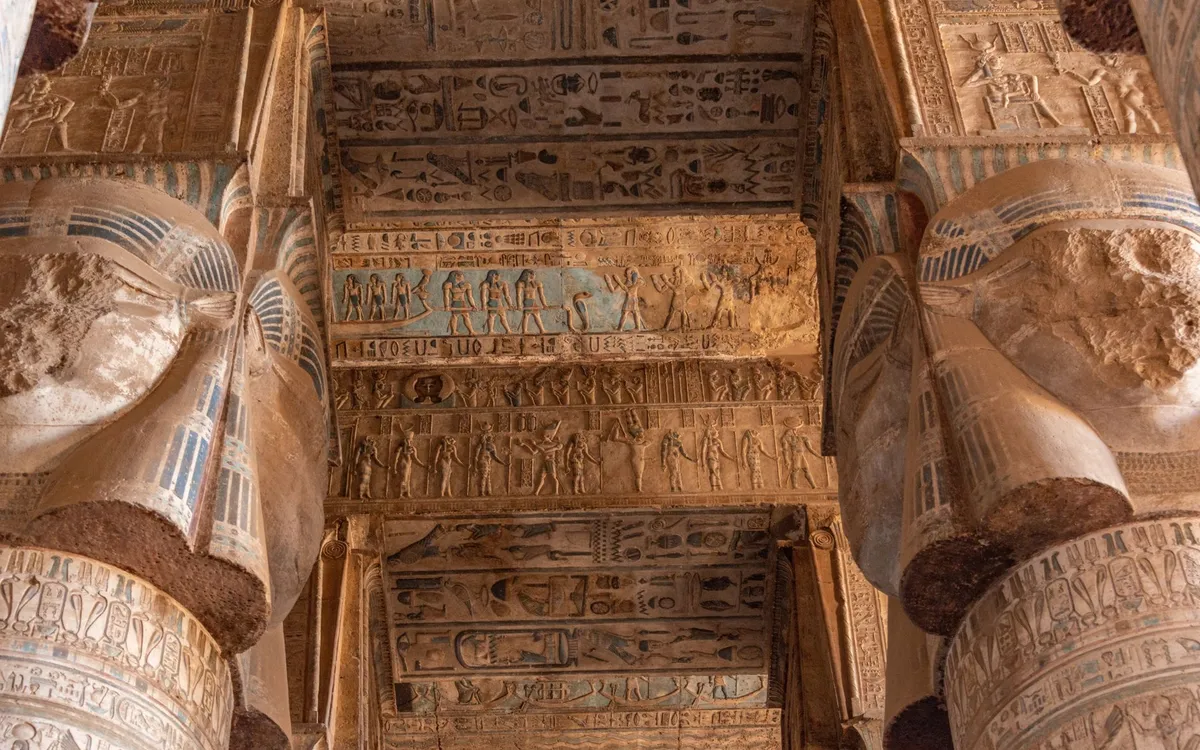
Dendera Temple Guide: Hathor's Temple and Its Painted Ceiling
Dendera dazzles with restored colour and a star-painted ceiling — one of Egypt's most complete temples, dedicated to the goddess Hathor.
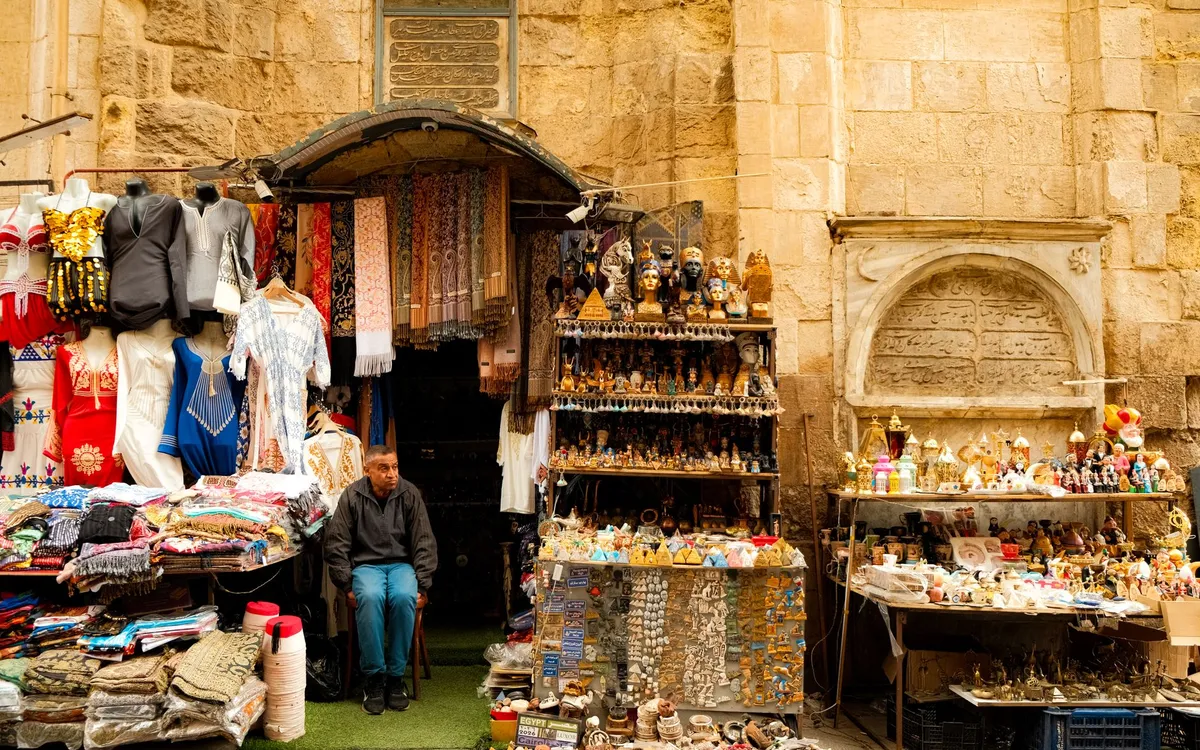
Khan el-Khalili Guide: Cairo's Historic Bazaar and How to Visit
Khan el-Khalili is Cairo's great medieval bazaar — a labyrinth of lantern-lit alleys, craftsmen, spice stalls and the legendary El Fishawy café.
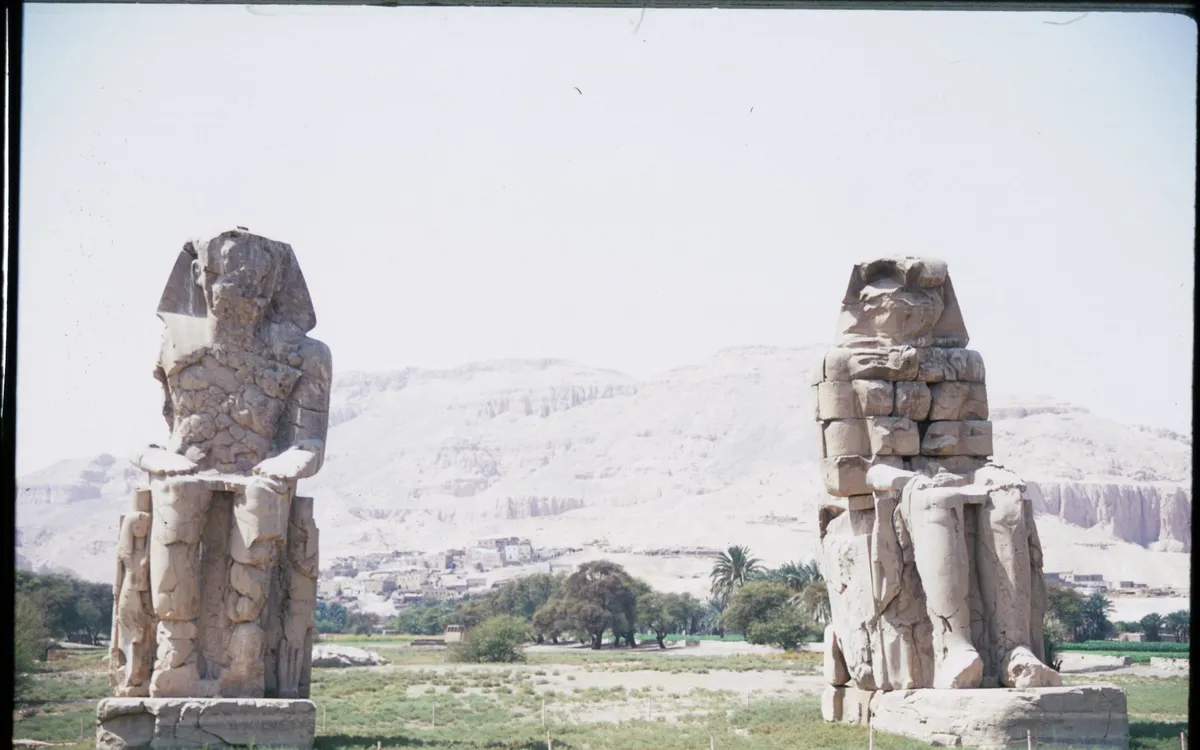
Colossi of Memnon Guide: Luxor's Twin Giants on the West Bank
Two colossal statues of Amenhotep III guard the road to Luxor's West Bank — a free, dramatic first stop on any tombs-and-temples day.