Mosque of Ibn Tulun Guide: Cairo's Oldest Intact Mosque
A Mosque of Ibn Tulun guide: Cairo's oldest intact mosque, the spiral minaret, vast courtyard, rooftop views, what to see, tickets, access and timing.
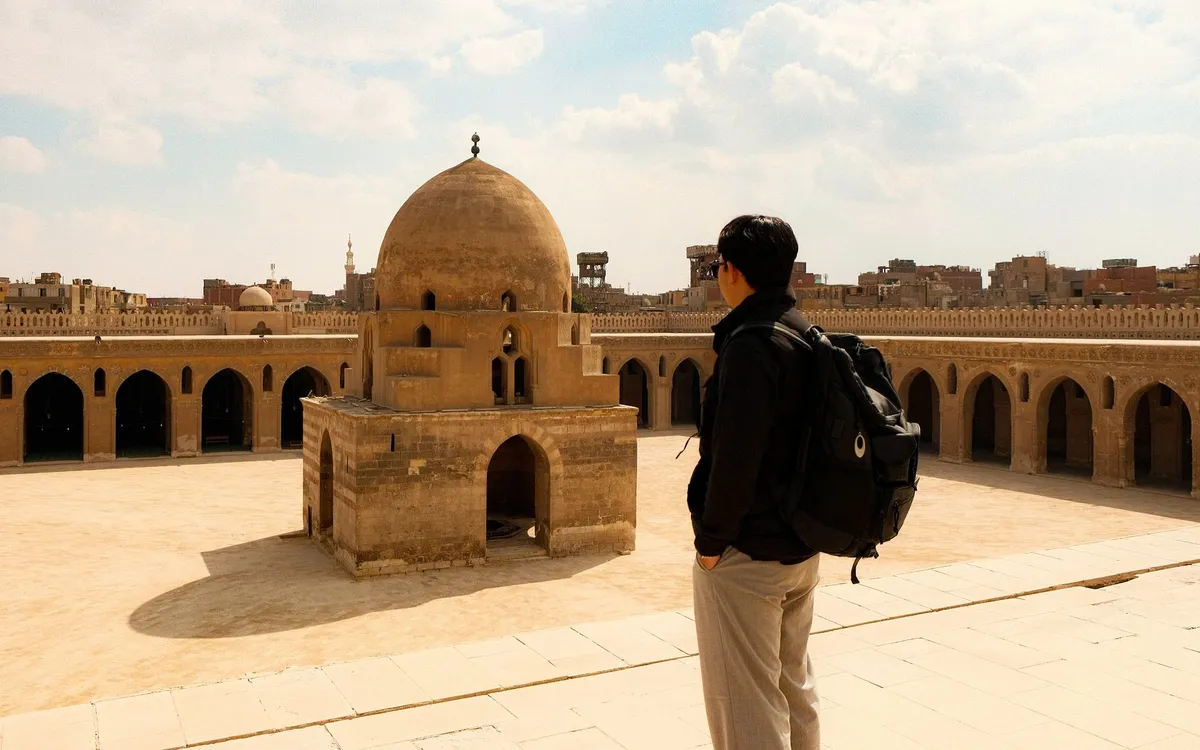
Away from the crowds of the bazaars, in a quiet district south of the Citadel, stands one of the most moving monuments in Cairo: the Mosque of Ibn Tulun. The oldest mosque in the city to survive largely in its original form, it is a masterpiece of early Islamic architecture, austere, vast and utterly serene. This guide covers its history, its famous spiral minaret, and how to enjoy one of the most peaceful visits in the capital.
What the Mosque of Ibn Tulun is and why it matters
The mosque was built in the 9th century by Ahmad ibn Tulun, the governor who founded a short-lived independent dynasty and his own capital near the old city. Constructed mainly of red brick faced with carved stucco, it is one of the largest mosques in Cairo by area and the only major one to retain its original ninth-century plan almost intact.
Its design looks back to the great early mosques of Iraq, with a huge open courtyard surrounded by arcaded halls and a distinctive minaret with an external spiral staircase. Because so little has been altered, walking through it feels like stepping directly into the architecture of the early Islamic world — a rare experience among Cairo’s much-rebuilt monuments.
What you see at the mosque
The mosque rewards slow, quiet exploration:
- The great courtyard (sahn) — an immense open square surrounded by pointed-arch arcades, with a domed ablution fountain at its centre.
- The spiral minaret — the famous helical tower with an outer staircase, unique in Cairo and inspired by earlier models; visitors can often climb it for a view.
- The carved stucco decoration — delicate geometric and floral ornament running along the arcades and windows, remarkably preserved.
- The rooftop and crenellations — distinctive battlements shaped like little figures, and sweeping views over the rooftops toward the Citadel.
Tip: climb the spiral minaret if it is open. The external staircase gives a striking view back down over the vast empty courtyard, and from the top you see the Citadel and the domes of Islamic Cairo laid out across the skyline.
Tickets and opening hours
The Mosque of Ibn Tulun is an active monument open to visitors, generally with a modest entry arrangement and reduced student rates on presentation of valid ID; access is managed by the Ministry of Tourism and Antiquities. Opening hours vary and may shift around prayer times, so confirm the current schedule before you go and check arrangements locally rather than relying on figures that change.
Dress modestly with shoulders and knees covered, bring a scarf for the head if needed, and remove your shoes before entering the prayer area; cloth overshoes are sometimes provided.
Getting there and how long to stay
The mosque lies in the Sayyida Zaynab area, south-west of the Citadel, easily reached by taxi or ride-hailing app. Next door stands the Gayer-Anderson Museum, a beautifully furnished pair of old houses well worth combining with your visit.
| Practicality | What to know |
|---|---|
| Location | South-west of the Citadel |
| Time needed | 1 to 1.5 hours |
| Best paired with | Gayer-Anderson Museum |
| Dress code | Modest; shoes off in the prayer area |
Allow around an hour to an hour and a half to take in the courtyard, climb the minaret and admire the stucco, with extra time if you visit the Gayer-Anderson Museum beside it.
Best time to visit and practical tips
The cooler months and the morning are ideal, when the courtyard is quiet and the light rakes across the arcades. Because the mosque is off the main tourist trail, it is usually calm at almost any time, making it a welcome contrast to the bustle of Khan el-Khalili.
Wear comfortable shoes for the minaret stairs, carry small cash for the entry and the shoe-keeper, and take your time in the vast empty court. For help fitting Ibn Tulun into a wider day in historic Cairo, see our plan your trip page. Stand at the centre of the courtyard, with arcades stretching away on every side and the spiral minaret rising into the sky — few places in Cairo offer such stillness, or such a direct connection to the early Islamic age.
Mosque of Ibn Tulun Guide: Cairo's Oldest Intact Mosque
Skip the queues and secure your spot — book your tickets and tours through our trusted partner Tiqets.
Check tickets on TiqetsTickets & activities in Cairo
Some links on EgyptInterActive are affiliate links: if you book through them we may earn a commission, at no extra cost to you. It never changes our recommendations.
Keep reading
Dendera Temple Guide: Hathor's Temple and Its Painted Ceiling
Dendera dazzles with restored colour and a star-painted ceiling — one of Egypt's most complete temples, dedicated to the goddess Hathor.
Khan el-Khalili Guide: Cairo's Historic Bazaar and How to Visit
Khan el-Khalili is Cairo's great medieval bazaar — a labyrinth of lantern-lit alleys, craftsmen, spice stalls and the legendary El Fishawy café.
Colossi of Memnon Guide: Luxor's Twin Giants on the West Bank
Two colossal statues of Amenhotep III guard the road to Luxor's West Bank — a free, dramatic first stop on any tombs-and-temples day.